Interactive quiz modules for children's LMS platforms
CLIENT
LIVE SITE
Visit website
TL;DR
Key takeaways
" transform="translate(2 2)" width="20px"/></svg>)
For kids, novelty is what keeps them engaged. Adults will push through a repetitive format if the content is valuable to them. Children mostly won't. If the mechanic doesn't change often enough, you lose them, and no amount of well-structured content pulls them back.
Match the input mechanic to what the question is actually testing. A date question wants a slider. A size-comparison question wants a scale-to-match. A location question wants a map. MCQ is the default because it's easy to build, not because it's usually the right fit.
Third-party quiz tools cap how far you can push the experience. You inherit their visual language, their interaction patterns, and their roadmap. Fine for adult compliance training. For kids, where engagement is the whole ballgame, this doesn't work.
A custom quiz module for a children's learning app, built around how 6-12 year-olds actually play
A client came to us last quarter with a couple of linked problems. Their app has solid video and text content, but for the interactive bits they'd been leaning on third-party quiz tools. Kahoot-inspired stuff, mostly. Multiple choice, tap one, move on. They wanted to bring that in-house but with way more control over how it looked and felt (and less reliance on someone else's platform).
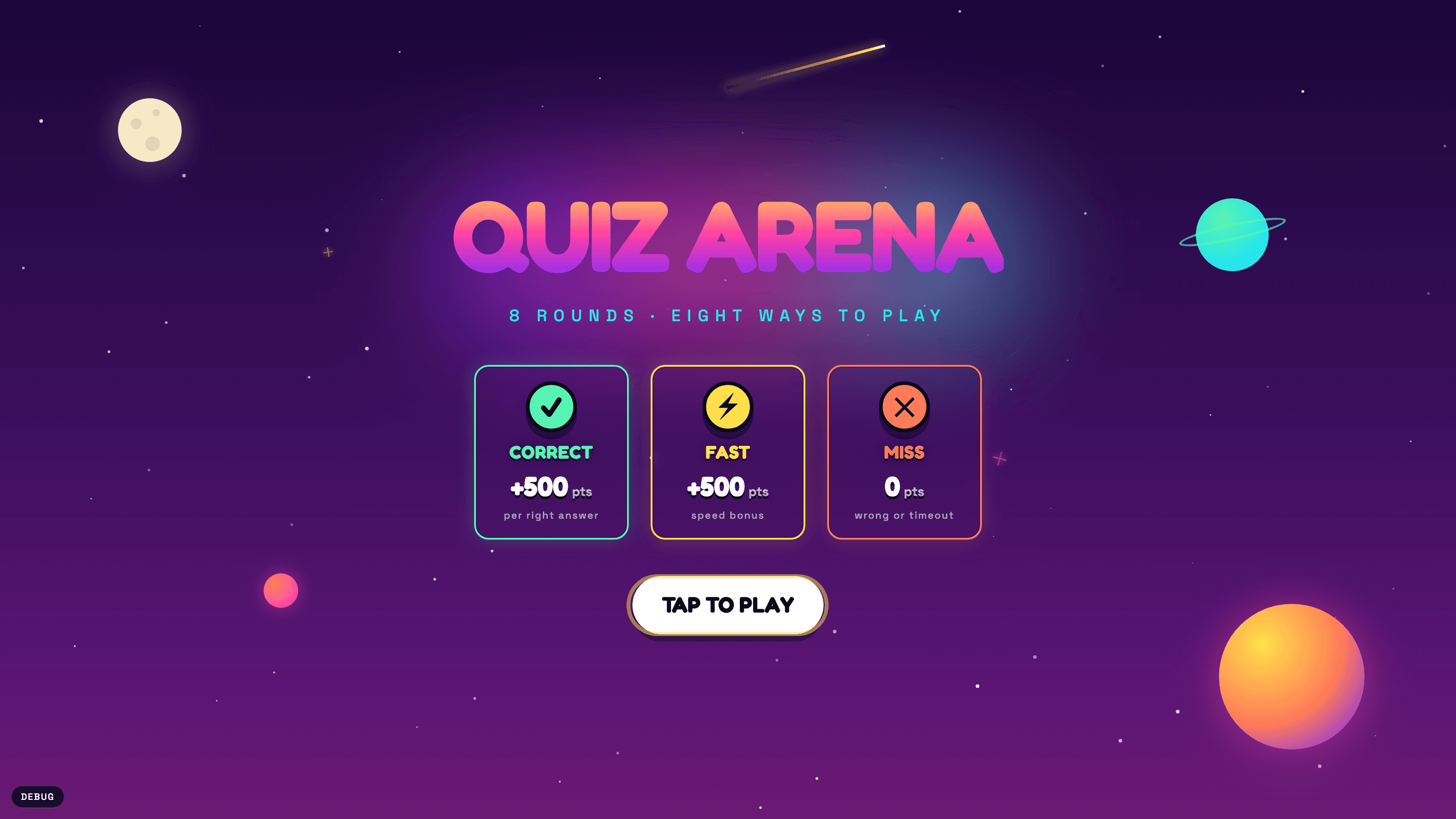
The audience matters here. This is for children, roughly age 6 to 12, and kids aren't forgiving of repetition in the way an adult finishing a compliance module is. Once a child predicts what's coming next, the attention cost of playing drops, and drop-off follows shortly after. The client's read was that sameness was what was killing engagement, and I think they were right.
No two questions alike
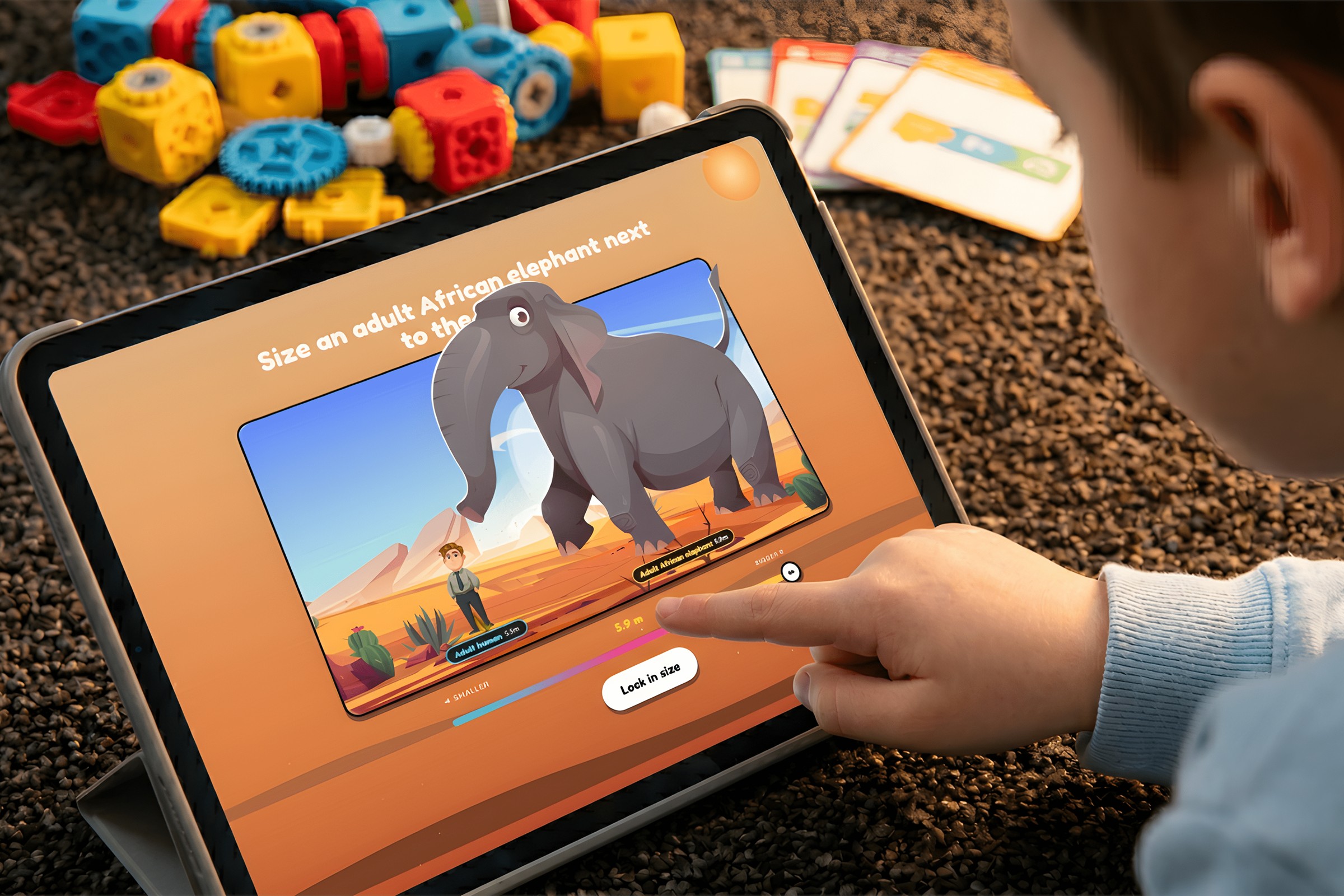
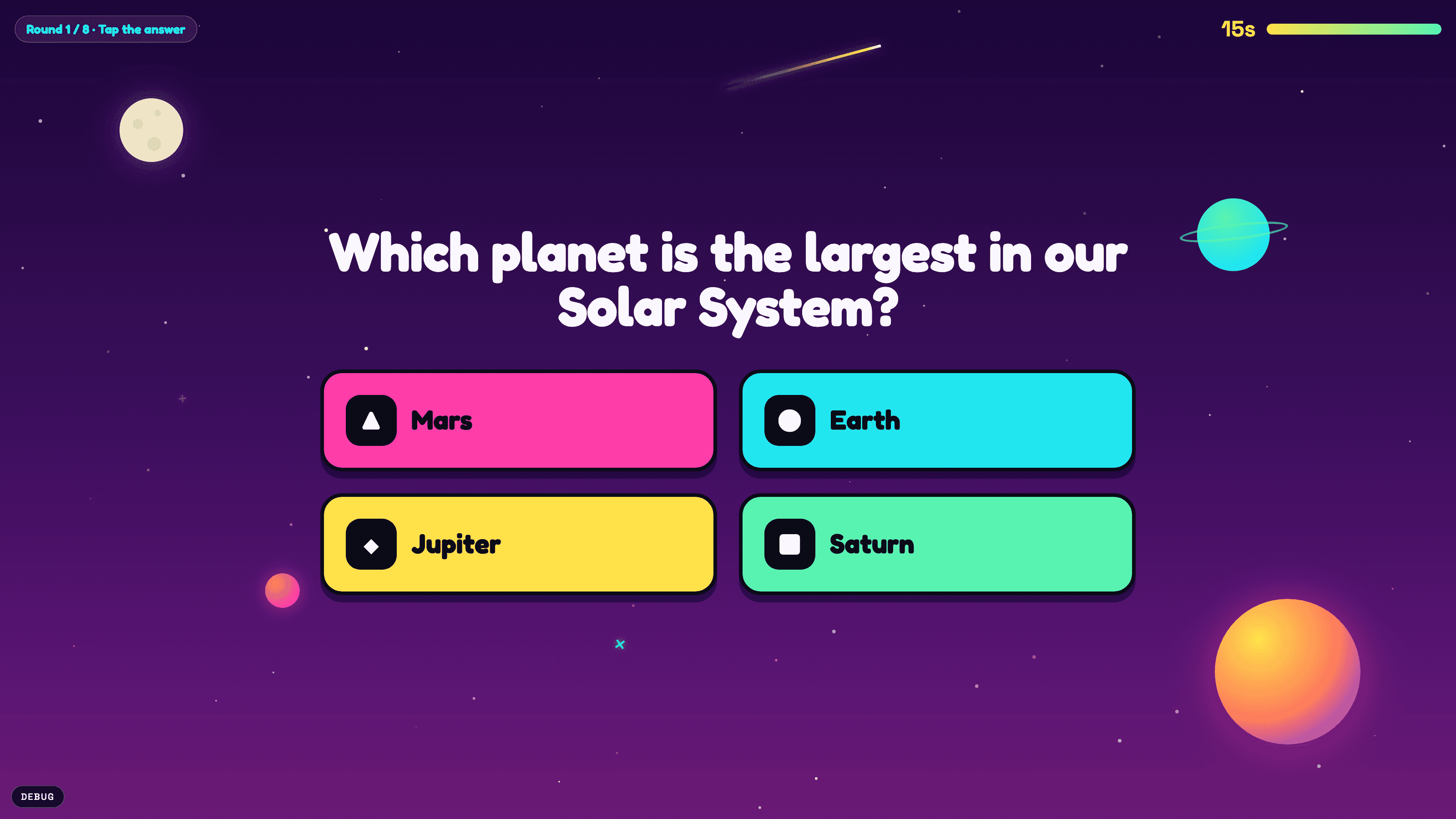
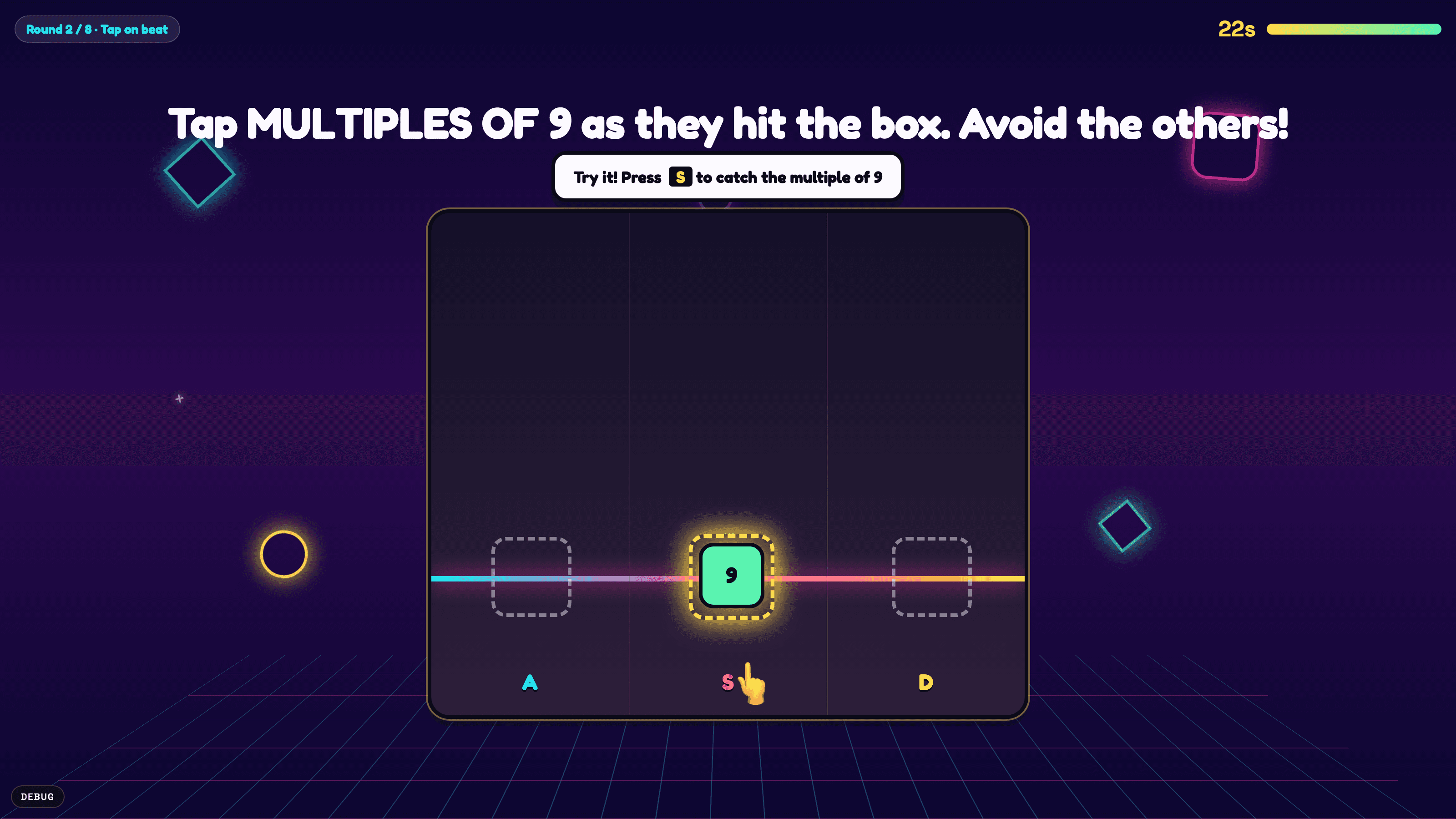
We built Quiz Arena around that. Same quiz-show shape: short rounds, score-per-round, big animations, final leaderboard. But every round uses a different input. Round one is standard MCQ. Round two is a Guitar Hero game where you tap the multiples of nine as they hit a target box. Round three drags anatomy labels onto a volcano. There's a year-slider for the Moon landing (with a tolerance band that reveals after lock-in), a pinch-to-scale round where you size an elephant against a human, a hot/cold map hunt that glows brighter as you drag the reticle closer, and a Tinder-style swipe sort for mammals vs reptiles.
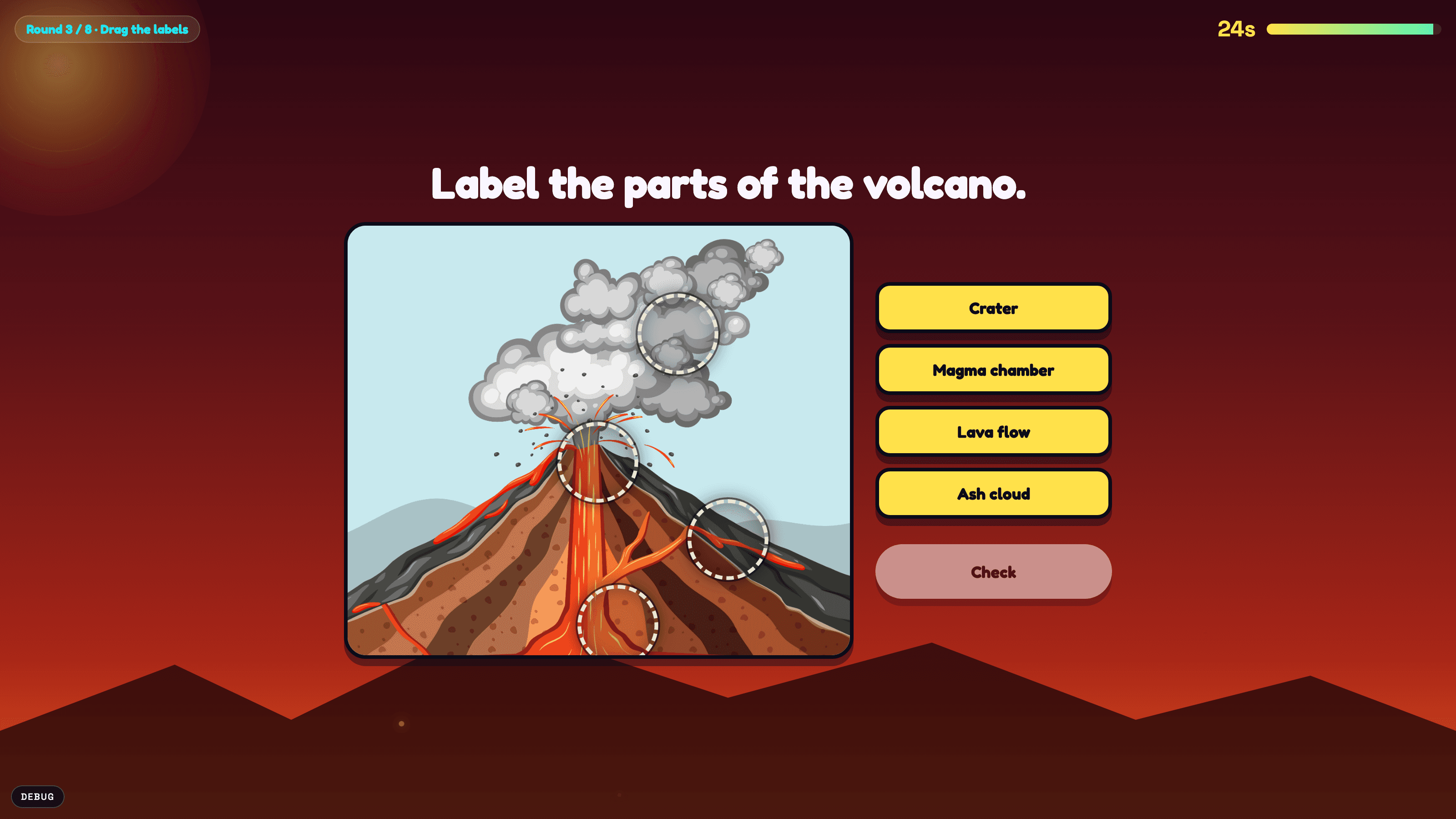
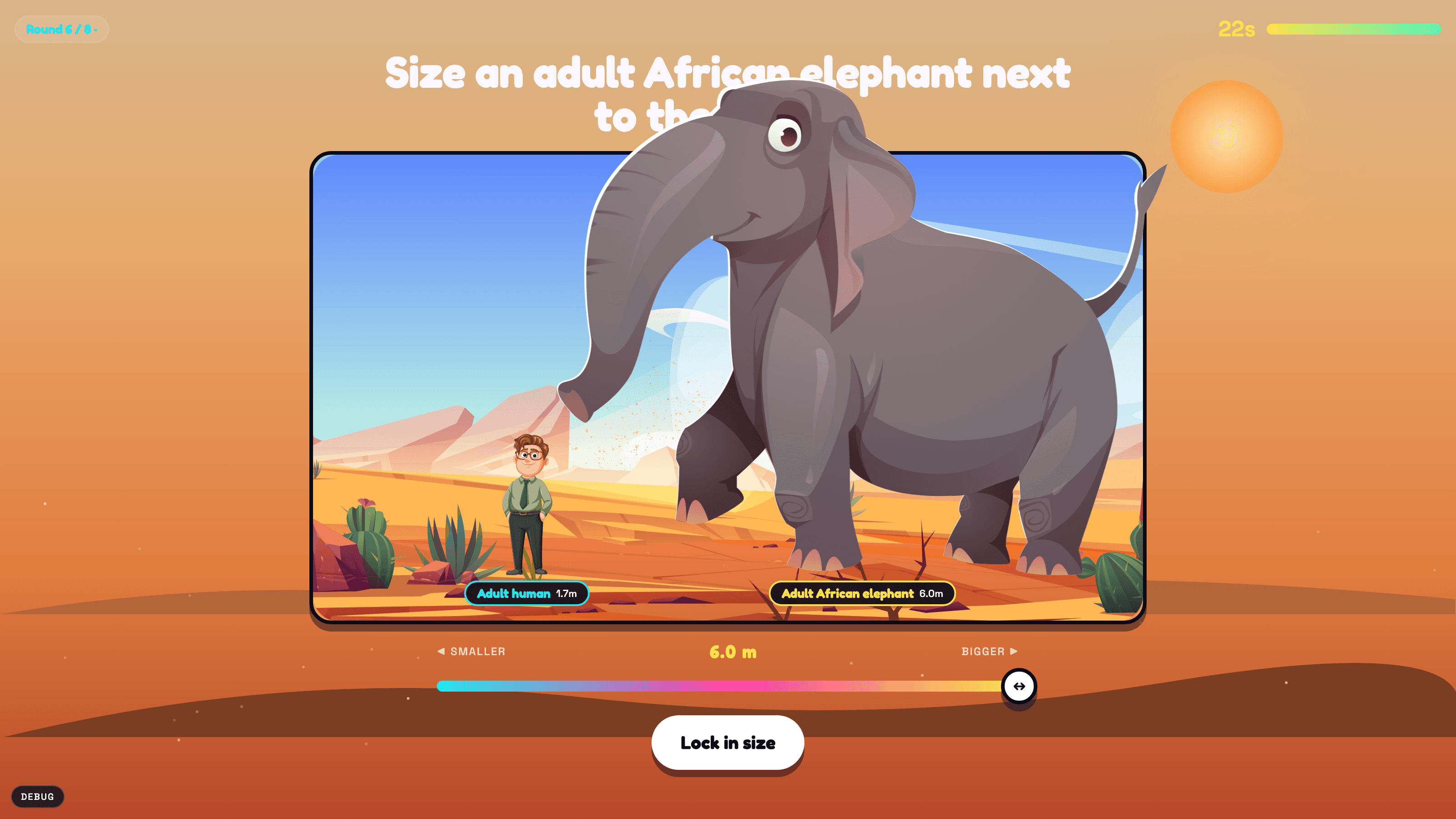
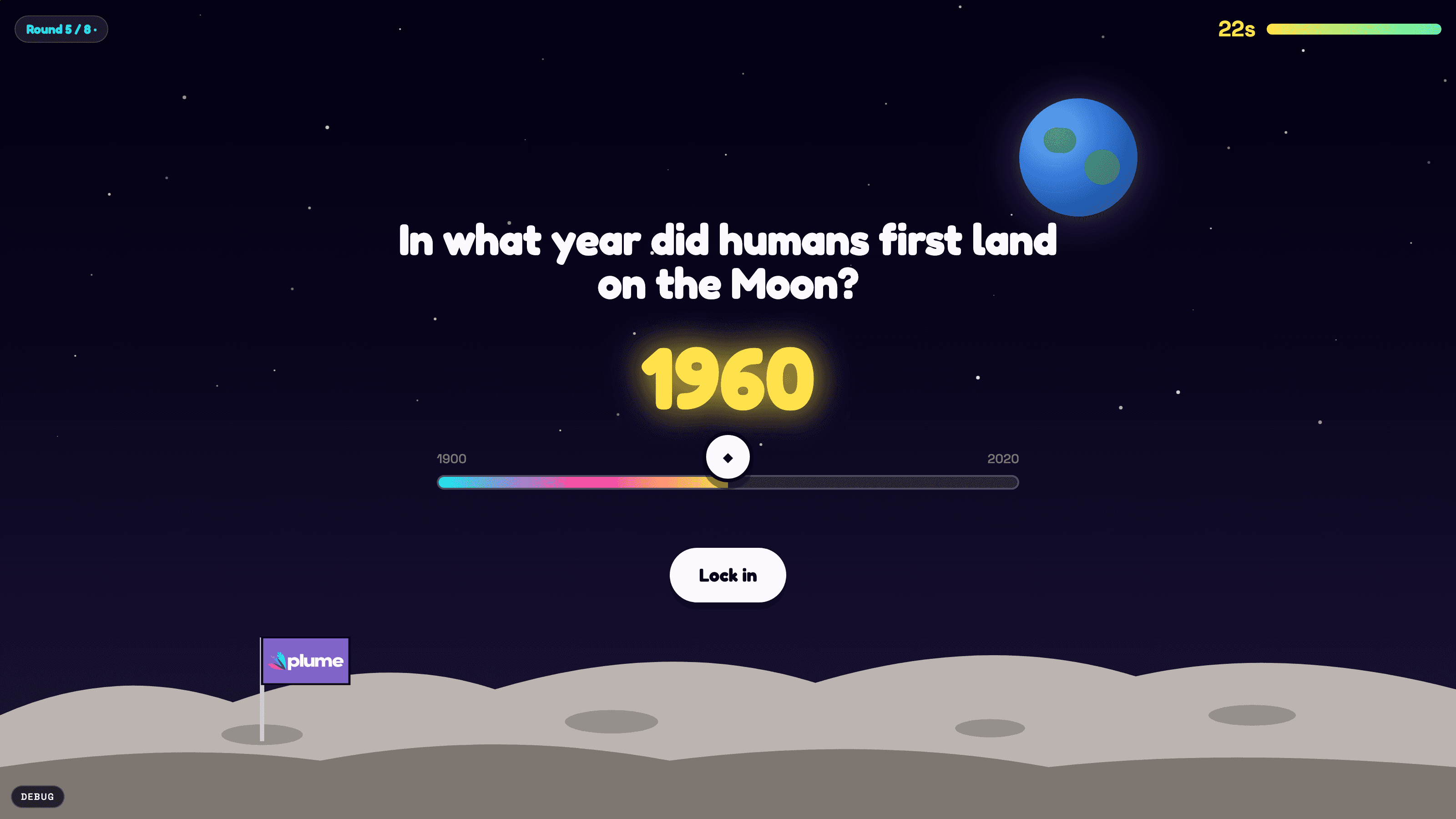
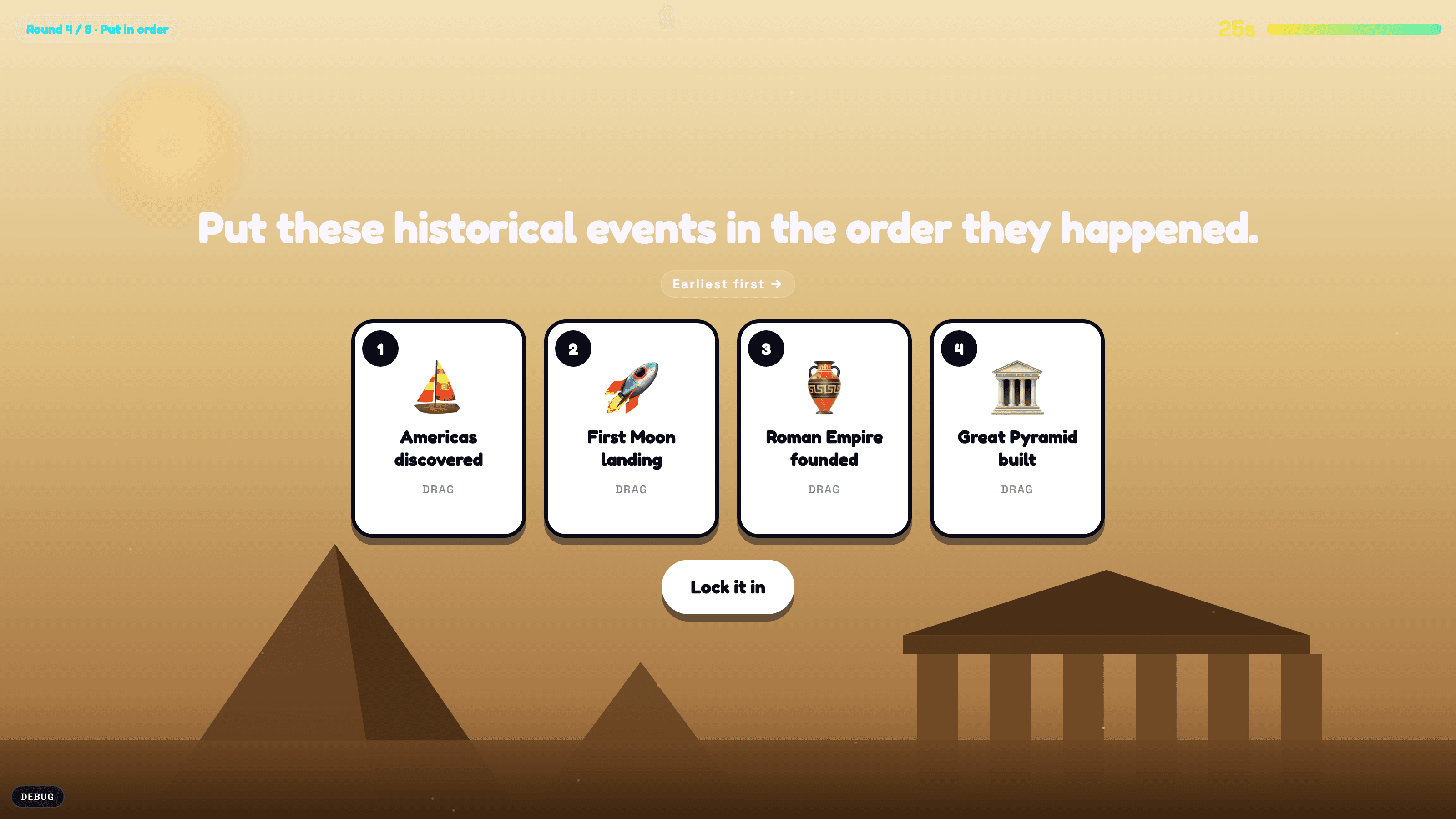
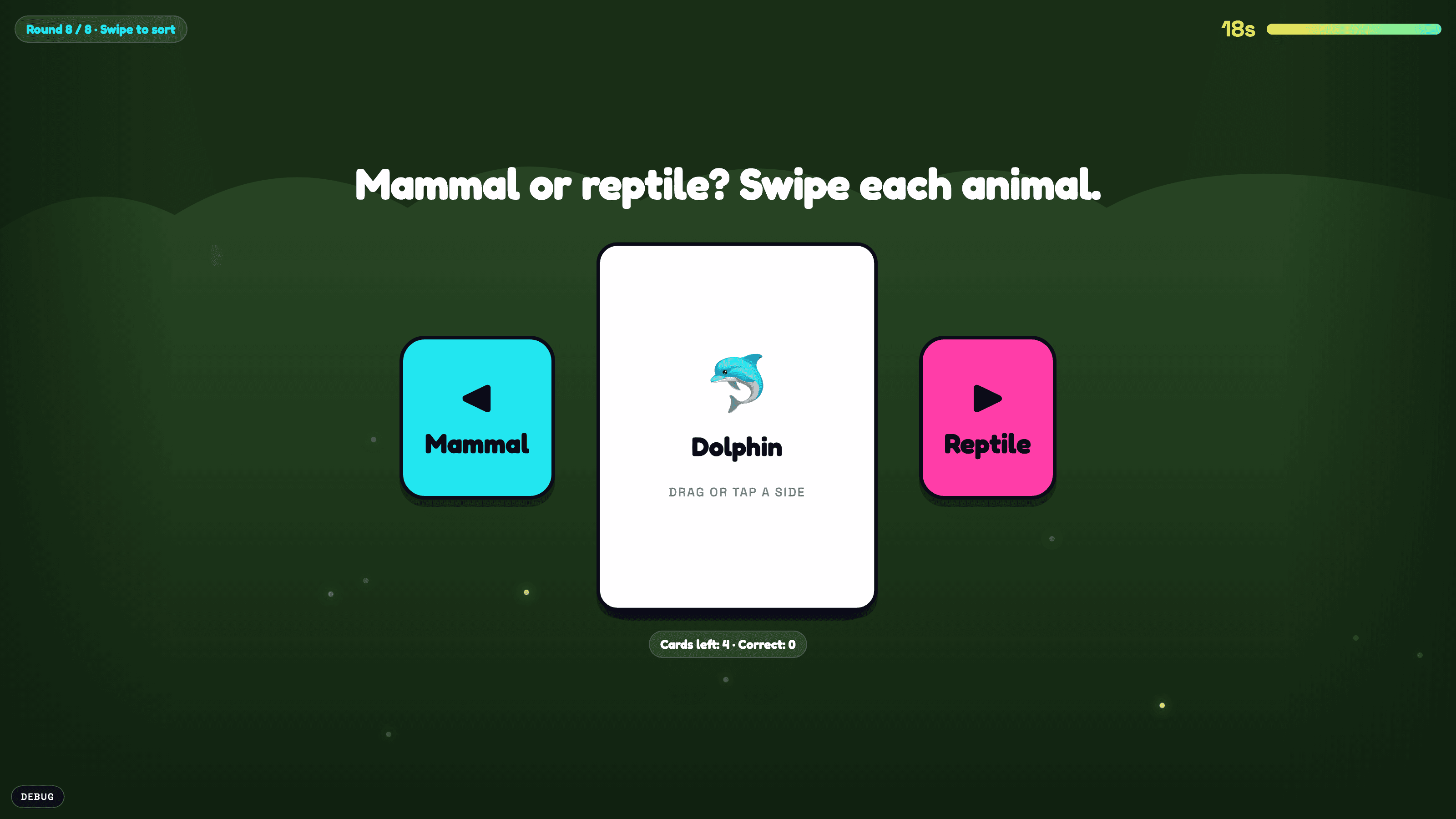
Different content types genuinely want different inputs, which is why there are eight of them. A "when did this happen" question fits a slider with a tolerance band so a near-miss feels rewarded rather than wrong. A "which is bigger" question fits a pinch-to-scale where the incorrect answer animates visibly to the right size, so the correction is the lesson. A "where is this place" question fits a map hunt with a hot/cold glow, so the child is learning spatial proximity, not just guessing. Each mechanic teaches in the way the content wants to be taught. And for a six-year-old, the novelty resets every thirty seconds, which is roughly the length of their attention span anyway.
Keeping kids engaged
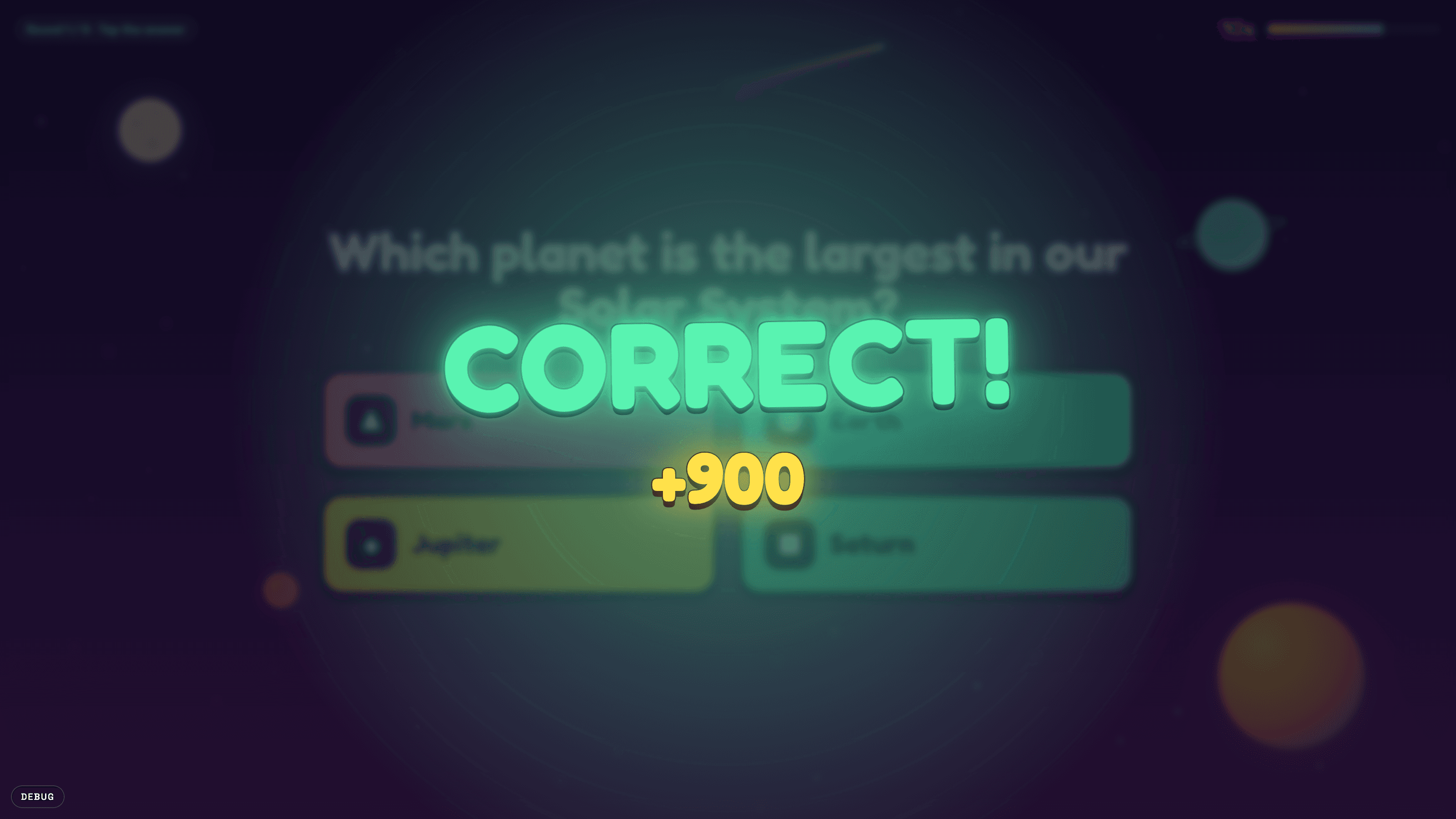
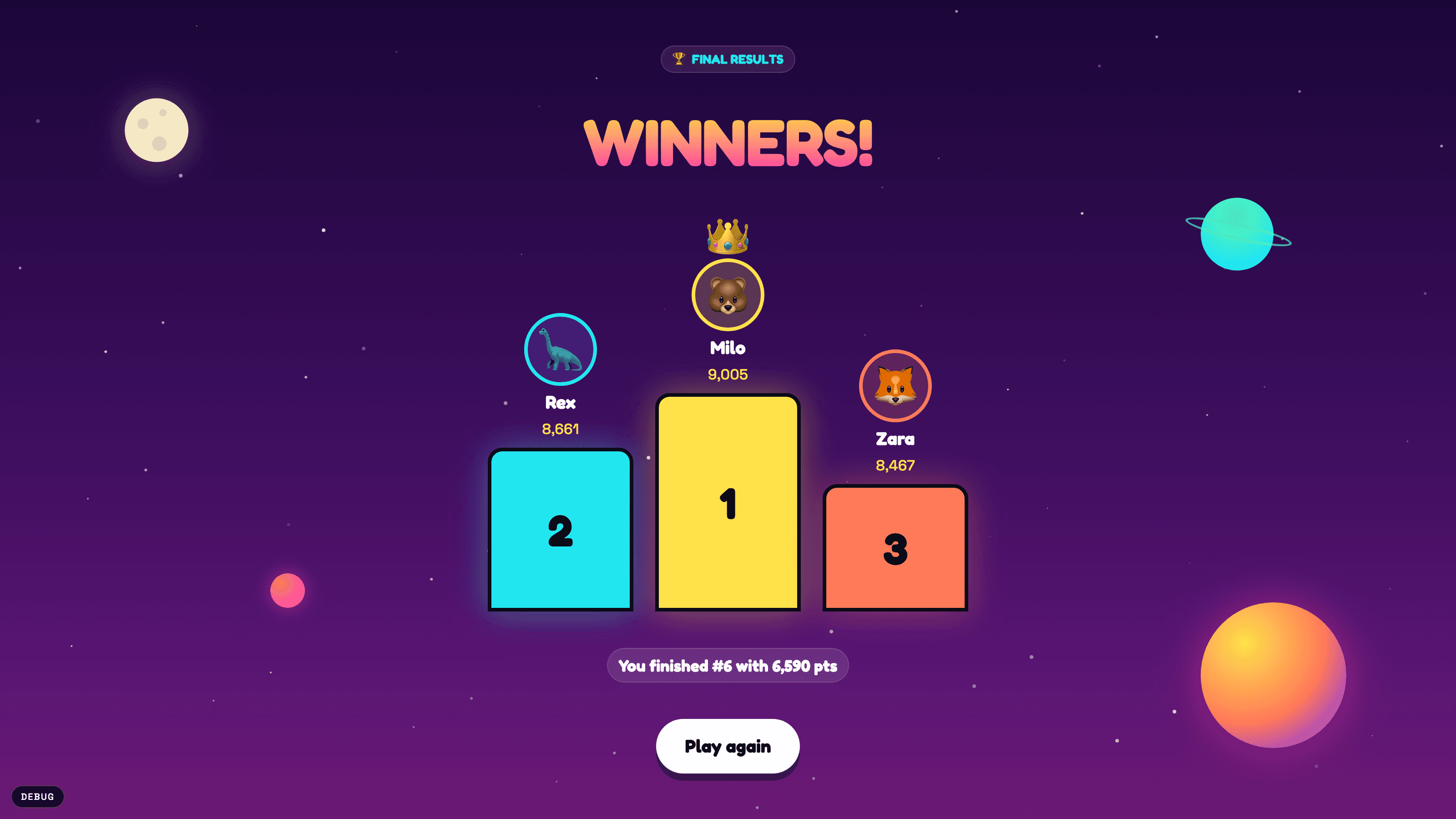
The feel layer does the rest. Each round gets its own parallax background: space, neon grid, lava, lunar surface (with a Plume flag planted on the moon, because why not), and a few others. Three drift speeds cross-fading between rounds. Reveal overlays with big CORRECT/OOPS callouts, row-climb leaderboard animations, three-tier podium with confetti on the winner. All synthesised SFX, no audio assets shipped. For a six-year-old, that's what keeps them playing round to round.
Expected outcome, based on the client's existing analytics: drop-off between rounds three and five flattens out, session lengths extend, and repeat-play rates climb. Replay rate is the one we care about most. If kids come back to a quiz after they've already learned the answers, they're playing for the mechanics, and that's a reasonable proxy for whether the format itself is working.
This one sits alongside the LMS work we do, not inside it. Most of our case studies are about platforms and scaffolding. This one's about what you do inside a course when video and text aren't carrying the engagement on their own. I think that's where a lot of training companies are starting to look next, and it's the kind of work we want to do more of.