Custom LMS reporting
Custom reporting for LMS teams that need to show results
Getting the right data to the right people in a form they can act on will win you more renewals.


Rated 4.6 on Trustpilot
Custom LMS reporting
Custom reporting for LMS teams that need to show results
Getting the right data to the right people in a form they can act on will win you more renewals.
Rated 4.6 on Trustpilot
Custom LMS reporting
Custom reporting for LMS teams that need to show results
Getting the right data to the right people in a form they can act on will win you more renewals.
Rated 4.6 on Trustpilot
Jack, 14 November
Experienced eLearning experts
Brilliant. Ford Creative and some of our clients have been working with Plume since 2017...
Andrew Jenkins, 29 August
Fantastic guidance and support
The process with Plume was transformative—they challenged us to think deeply about...
Carly, 10 September
Outstanding Blueprint and UX Design
We partnered with Plume to create a blueprint for our new learning platform, and the experience was invaluable. Outstanding to work with.
Paul, 9 September
5 years working together and growing
With no costly rebuilds or workarounds required, they’ve removed the growth barriers that once held us back
Steve, 15 November
Solid Choice!
They’re incredibly organized, thorough, and respect everyone’s time. Because of them, we’ll finally have a new learning platform up in record time.
What standard reporting misses
Every LMS client we talk to has the same problem. The platform captures activity, not outcomes. It records that something happened, not whether it worked.
For learning companies that sell to businesses, that gap is a sales problem. A client who can say "this training saved us $40k" wins the renewal. A client who can show a completion rate doesn't.
The platform isn't the obstacle - the reporting architecture is.
We build the reporting layer that connects learning data to business reality: CRM records, team hierarchies, financial outcomes, and the engagement signals that actually matter to your clients.
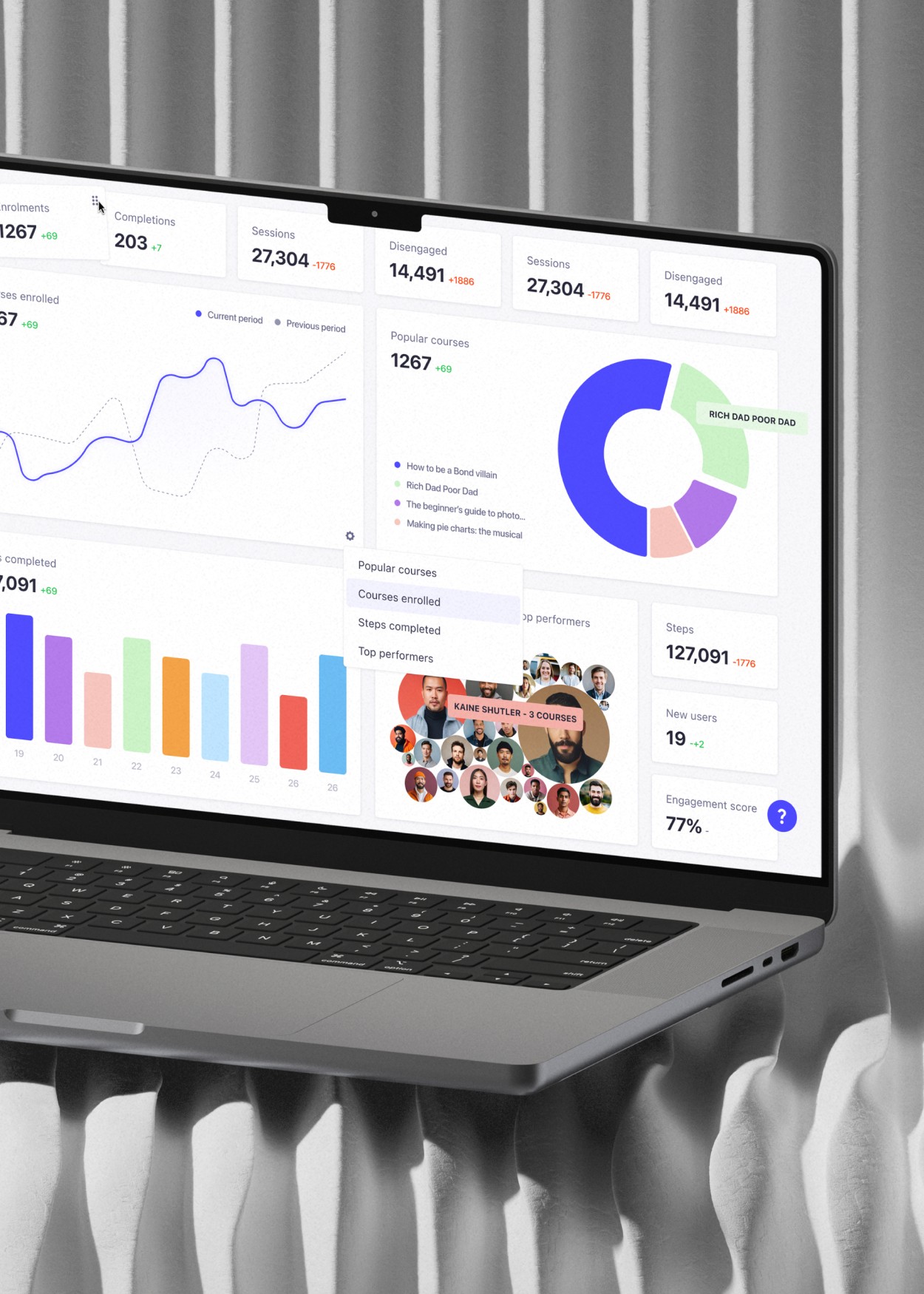
6 reporting problems we've seen across every client we've worked with
You can't prove ROI to customers
If customers can't see the value you're providing to them, they leave for a competitor that can.
B2B customers can't act on data they can't see
Without real-time reports, they can't make decisions or support their team.
Engagement data is too shallow
Logins and completions are a start, but without knowing where people drop off or what they skip, you can't spot or fix problems.
Clients are looking at the wrong metrics
Logins don't tell them if their team is learning. They need data that connects to performance, progress, and business outcomes.
Your data is fragmented
The LMS, your CRM, your website with no single view of what's actually happening.
CEU and CPD tracking is a workaround
Continuing education credits require a second login, a separate system, or a manual award process. None of it scales.
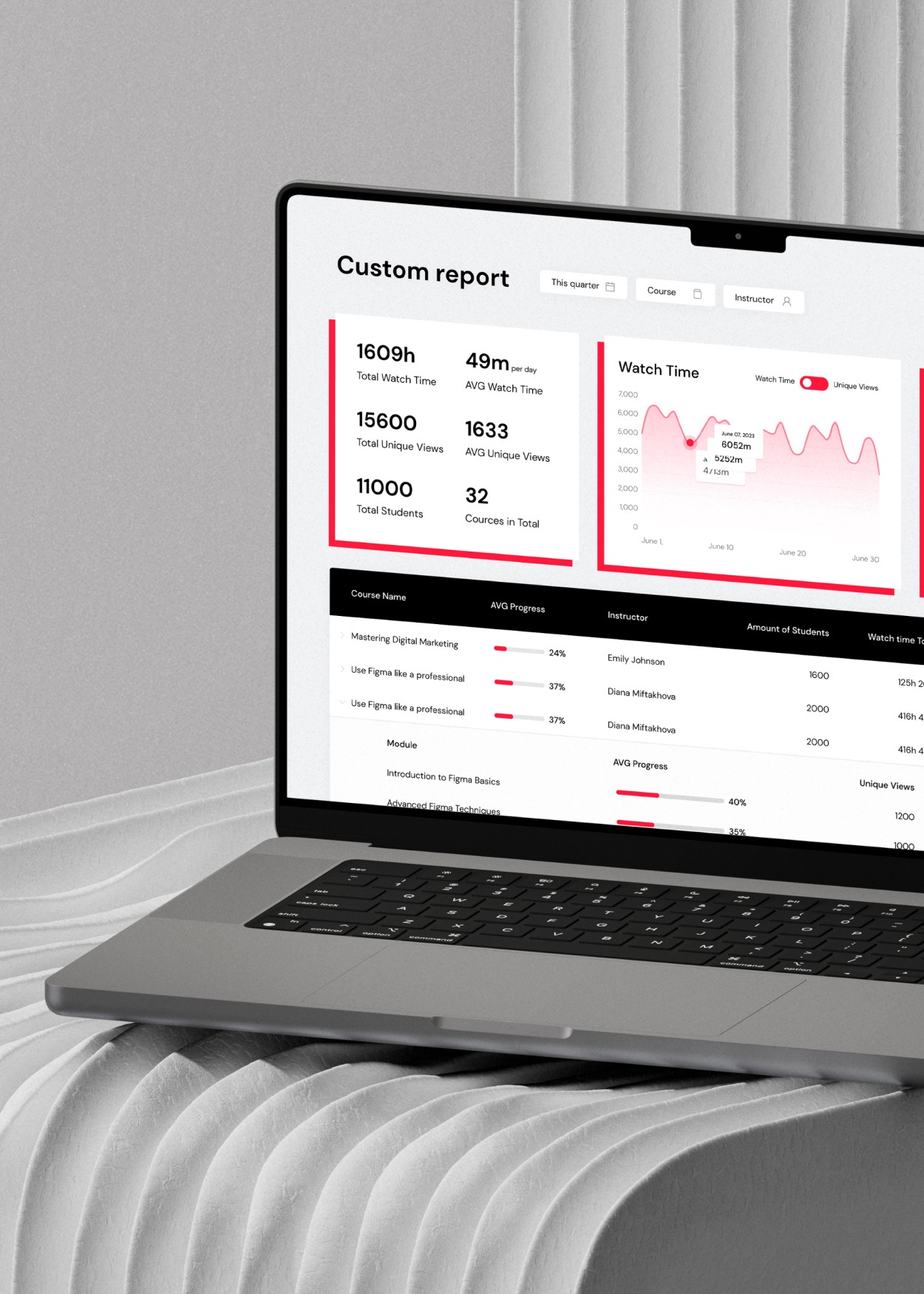
We turn learning data into a commercial argument
Your clients need to justify the spend. That means connecting training activity to business outcomes - not just course completions. We build the dashboards that give your clients a clear view of what the training is doing for their business, and give you the data to win renewals.
Business outcome tracking tied to learner activity, so clients can prove the value of their training.
Business outcome tracking tied to learner activity
Granular engagement data showing where people drop off, what they skip, and how they're actually learning.
White-label client dashboards with team hierarchy
Real-time client dashboards so B2B buyers can manage their teams without coming to you first.
CRM integration so Salesforce reflects learning progress
Reporting built around what clients care about - performance, progress, and outcomes, not logins.
CRM integration so Salesforce reflects learning progress
CRM and data integration so the LMS, Salesforce, and your website share a single picture.
CRM integration so Salesforce reflects learning progress
CEU/CPD tracking built in - no second login, no manual process, no workaround.
CEU/CPD tracking built into the core platform flow
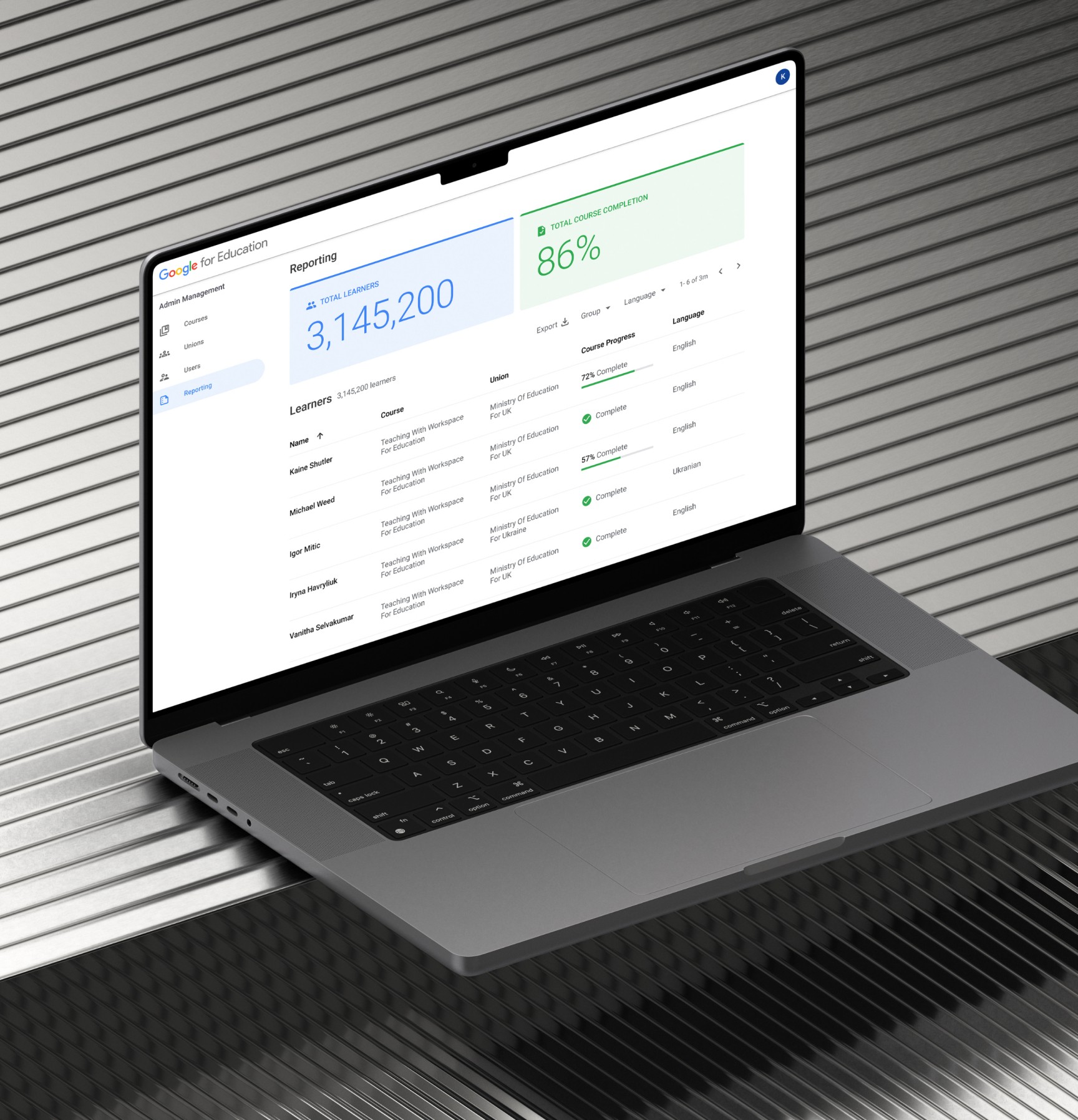
Built for your team to own
We design reporting systems your team can maintain and extend. Clear data ownership, documented pipelines, and a handoff that doesn't leave you dependent on us to keep it running.
Automated dashboards replacing manual export cycles
Deep content event tracking inside SCORM modules
CRM and data warehouse integrations
Code and documentation your team actually owns
Built for your team to own
We design reporting systems your team can maintain and extend. Clear data ownership, documented pipelines, and a handoff that doesn't leave you dependent on us to keep it running.
Automated dashboards replacing manual export cycles
Deep content event tracking inside SCORM modules
CRM and data warehouse integrations
Code and documentation your team actually owns
Built for your team to own
We design reporting systems your team can maintain and extend. Clear data ownership, documented pipelines, and a handoff that doesn't leave you dependent on us to keep it running.
Automated dashboards replacing manual export cycles
Deep content event tracking inside SCORM modules
CRM and data warehouse integrations
Code and documentation your team actually owns
Carly, 10 September
We partnered with Plume to create a blueprint for our new LMS, and the experience was invaluable. Outstanding to work with.
Paul, 9 September
With no costly rebuilds or workarounds required, they’ve removed the growth barriers that once held us back
Carly, 10 September
We partnered with Plume to create a blueprint for our new LMS, and the experience was invaluable. Outstanding to work with.
Paul, 9 September
With no costly rebuilds or workarounds required, they’ve removed the growth barriers that once held us back
Carly, 10 September
We partnered with Plume to create a blueprint for our new LMS, and the experience was invaluable. Outstanding to work with.
Paul, 9 September
With no costly rebuilds or workarounds required, they’ve removed the growth barriers that once held us back
Frequently asked questions
Have more questions? Send us a message or schedule a call with our founder by clicking here
What is LMS reporting and why does it matter for my business?
" transform="translate(1 1)" width="13.463999999999999px"/></svg>)
LMS reporting is the data your learning platform captures about how people use it - completions, progress, engagement, and outcomes. For learning companies selling to businesses, it's what determines whether clients can see the value of their training. If the reporting is shallow, proving that value is harder than it needs to be.
What's the difference between LMS reporting and LMS analytics?
Reporting shows you what happened. Analytics helps you understand why - and what to do next. Most platforms offer reporting out of the box. Analytics requires a more deliberate architecture, one that connects learning activity to business outcomes rather than just logging events.
Why can't my LMS show ROI to clients?
Most LMS platforms are built to track activity, not outcomes. They record that a course was completed, not what changed as a result. Connecting learning data to business results - project savings, team performance, revenue impact - requires a reporting layer that most off-the-shelf platforms don't provide.
Can I give my B2B clients their own reporting dashboards?
Yes, but it requires custom development. Most platforms treat every user the same, with no concept of team hierarchy or client-level reporting. A white-label dashboard built around your clients' data gives them visibility into their own teams - and removes you from the middle of every reporting request.
How do I connect my LMS data to Salesforce?
Out of the box, most LMS platforms and CRMs don't talk to each other. Connecting them requires an integration layer - typically built around an API or middleware - that maps learning progress to account records in Salesforce. Done well, it means your commercial team always knows which clients are engaged and which aren't.
What is xAPI and how does it improve LMS analytics?
xAPI is a data standard that tracks learning activity at a granular level - not just whether a module was completed, but which sections were viewed, for how long, and in what order. For companies that need to understand how people are actually engaging with content, xAPI gives you a much clearer picture than standard SCORM reporting.
How much does custom LMS reporting cost?
It depends on the scope - what data sources need connecting, how many dashboards are required, and how complex the client hierarchy is. Most projects start with a Blueprint: a fixed-scope engagement that maps the architecture and defines success criteria before any development begins. That scoping investment typically saves significant time and cost later.
How long does it take to build a custom LMS reporting system?
A well-scoped reporting system can move from Blueprint to production in 30 days. The variable is usually clarity - vague requirements and undefined success metrics are what push timelines out. Getting the spec right early is what keeps the build on track.
Frequently asked questions
Have more questions? Send us a message or schedule a call with our founder by clicking here
What is LMS reporting and why does it matter for my business?
LMS reporting is the data your learning platform captures about how people use it - completions, progress, engagement, and outcomes. For learning companies selling to businesses, it's what determines whether clients can see the value of their training. If the reporting is shallow, proving that value is harder than it needs to be.
What's the difference between LMS reporting and LMS analytics?
Reporting shows you what happened. Analytics helps you understand why - and what to do next. Most platforms offer reporting out of the box. Analytics requires a more deliberate architecture, one that connects learning activity to business outcomes rather than just logging events.
Why can't my LMS show ROI to clients?
Most LMS platforms are built to track activity, not outcomes. They record that a course was completed, not what changed as a result. Connecting learning data to business results - project savings, team performance, revenue impact - requires a reporting layer that most off-the-shelf platforms don't provide.
Can I give my B2B clients their own reporting dashboards?
Yes, but it requires custom development. Most platforms treat every user the same, with no concept of team hierarchy or client-level reporting. A white-label dashboard built around your clients' data gives them visibility into their own teams - and removes you from the middle of every reporting request.
How do I connect my LMS data to Salesforce?
Out of the box, most LMS platforms and CRMs don't talk to each other. Connecting them requires an integration layer - typically built around an API or middleware - that maps learning progress to account records in Salesforce. Done well, it means your commercial team always knows which clients are engaged and which aren't.
What is xAPI and how does it improve LMS analytics?
xAPI is a data standard that tracks learning activity at a granular level - not just whether a module was completed, but which sections were viewed, for how long, and in what order. For companies that need to understand how people are actually engaging with content, xAPI gives you a much clearer picture than standard SCORM reporting.
How much does custom LMS reporting cost?
It depends on the scope - what data sources need connecting, how many dashboards are required, and how complex the client hierarchy is. Most projects start with a Blueprint: a fixed-scope engagement that maps the architecture and defines success criteria before any development begins. That scoping investment typically saves significant time and cost later.
How long does it take to build a custom LMS reporting system?
A well-scoped reporting system can move from Blueprint to production in 30 days. The variable is usually clarity - vague requirements and undefined success metrics are what push timelines out. Getting the spec right early is what keeps the build on track.
Frequently asked questions
Have more questions? Send us a message or schedule a call with our founder by clicking here
What is LMS reporting and why does it matter for my business?
LMS reporting is the data your learning platform captures about how people use it - completions, progress, engagement, and outcomes. For learning companies selling to businesses, it's what determines whether clients can see the value of their training. If the reporting is shallow, proving that value is harder than it needs to be.
What's the difference between LMS reporting and LMS analytics?
Reporting shows you what happened. Analytics helps you understand why - and what to do next. Most platforms offer reporting out of the box. Analytics requires a more deliberate architecture, one that connects learning activity to business outcomes rather than just logging events.
Why can't my LMS show ROI to clients?
Most LMS platforms are built to track activity, not outcomes. They record that a course was completed, not what changed as a result. Connecting learning data to business results - project savings, team performance, revenue impact - requires a reporting layer that most off-the-shelf platforms don't provide.
Can I give my B2B clients their own reporting dashboards?
Yes, but it requires custom development. Most platforms treat every user the same, with no concept of team hierarchy or client-level reporting. A white-label dashboard built around your clients' data gives them visibility into their own teams - and removes you from the middle of every reporting request.
How do I connect my LMS data to Salesforce?
Out of the box, most LMS platforms and CRMs don't talk to each other. Connecting them requires an integration layer - typically built around an API or middleware - that maps learning progress to account records in Salesforce. Done well, it means your commercial team always knows which clients are engaged and which aren't.
What is xAPI and how does it improve LMS analytics?
xAPI is a data standard that tracks learning activity at a granular level - not just whether a module was completed, but which sections were viewed, for how long, and in what order. For companies that need to understand how people are actually engaging with content, xAPI gives you a much clearer picture than standard SCORM reporting.
How much does custom LMS reporting cost?
It depends on the scope - what data sources need connecting, how many dashboards are required, and how complex the client hierarchy is. Most projects start with a Blueprint: a fixed-scope engagement that maps the architecture and defines success criteria before any development begins. That scoping investment typically saves significant time and cost later.
How long does it take to build a custom LMS reporting system?
A well-scoped reporting system can move from Blueprint to production in 30 days. The variable is usually clarity - vague requirements and undefined success metrics are what push timelines out. Getting the spec right early is what keeps the build on track.
Let's explore your options
After you submit, our AI assistant will call you for a quick 2-3 minute chat about your project, so we can work out which options fit. You can book a call with our founder now, or after your chat with the assistant.


4.6 on Trustpilot
"They didn't just sell us a service and take our money, they assessed our needs first."
Let's explore your options
After you submit, our AI assistant will call you for a quick 2-3 minute chat about your project, so we can work out which options fit. You can book a call with our founder now, or after your chat with the assistant.
Let's explore your options
After you submit, our AI assistant will call you for a quick 2-3 minute chat about your project, so we can work out which options fit. You can book a call with our founder now, or after your chat with the assistant.
Plan your next learning platform with our founder
About Plume
As the leading custom learning platform provider serving training businesses in the US, UK and Europe, we help businesses design, build and grow pioneering learning tech that unlocks limitless growth potential.
Plan your next learning platform with our founder
About Plume
As the leading custom learning platform provider serving training businesses in the US, UK and Europe, we help businesses design, build and grow pioneering learning tech that unlocks limitless growth potential.
Plan your next learning platform with our founder
About Plume
As the leading custom learning platform provider serving training businesses in the US, UK and Europe, we help businesses design, build and grow pioneering learning tech that unlocks limitless growth potential.
